

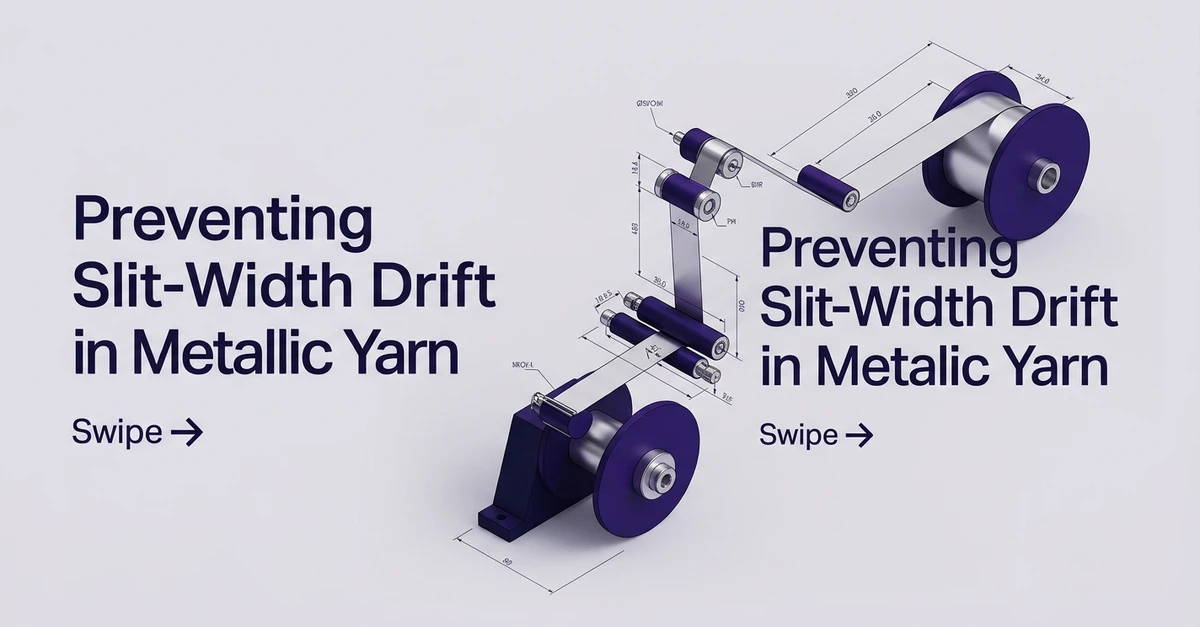
High rewinding speeds aren’t ruining your metallic yarn—uncontrolled slit-width drift and ambient oxidation are.
When processing decorative and high-grade metallic yarns, high-speed rewinding demands precise mechanical control. A slight variance in slit-width tolerance distorts yarn tenacity, creating uneven package builds and inconsistent unwinding tension on downstream looms.
To preserve film integrity during processing, technical teams must focus on three core controls:
• Micro-Climate Storage: Protect metallic film stocks from ambient atmospheric moisture to prevent surface oxidation before rewinding begins.
• Tension Stabilization: Maintain uniform line tension across guide rollers to eliminate slit-width stretching and maintain consistent denier per filament (DPF) profiles.
• Contact Surface Calibration: Utilize low-friction guides to prevent surface abrasion and coating degradation during rapid thermoplastic fiber processing.
Controlling these mechanical variables prevents slitting defects, minimizes loom stoppages, and delivers pristine fabric surface aesthetics.
What tension parameters are your mill teams currently optimizing for high-speed metallic yarn rewinding?