

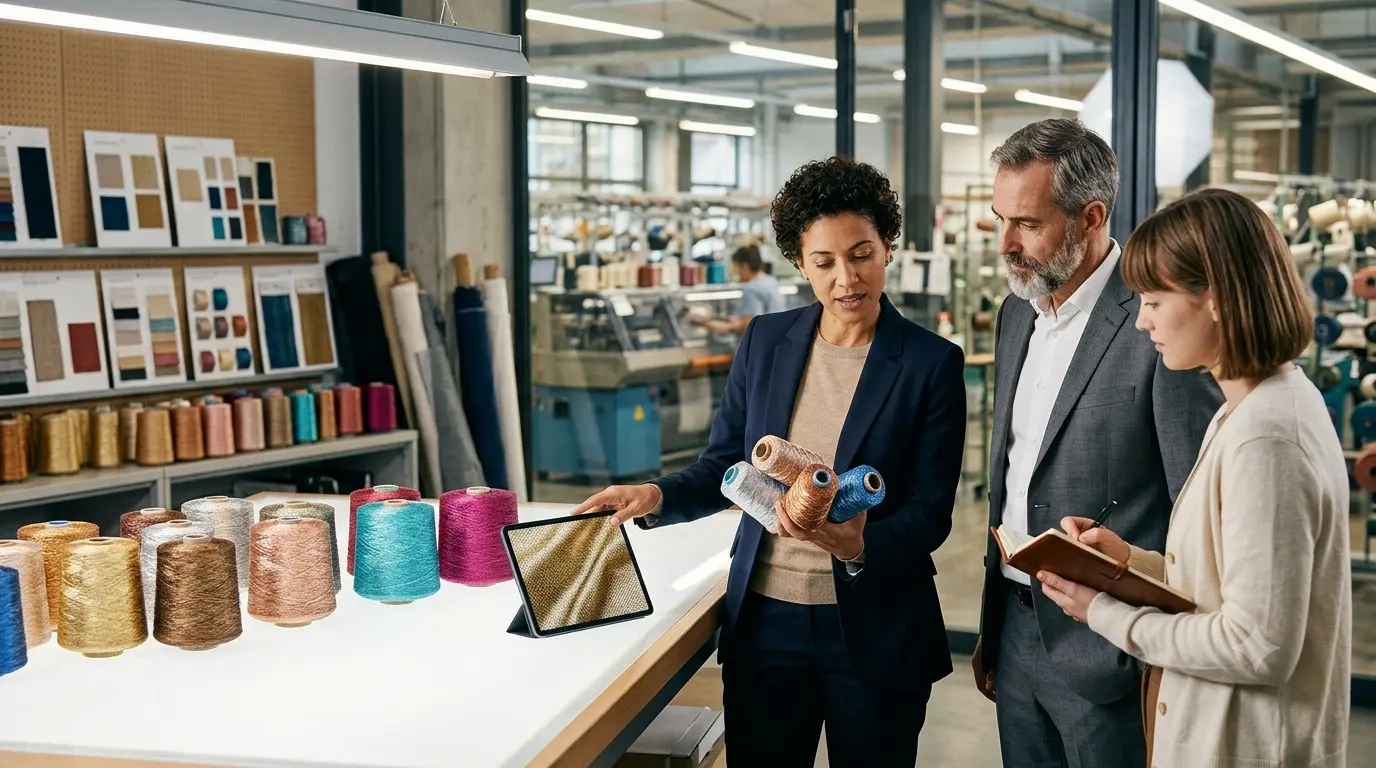
The biggest mistake in sourcing metallic yarns is treating them like standard synthetic filaments. If you pick a yarn based on a swatch card without checking the metal foil adhesion or the tensile strength under high tension, you will likely end up with a production line full of breaks and “shredded” metallic flakes that look like glitter on a bad carpet. Finding reliable metallic yarn manufacturers means looking past the catalog and asking about the polymer base and the vacuum metallization process used to bond the aluminum to the film.
The friction between aesthetics and machine efficiency
Most garment producers want the high shine of a lurex-style yarn but forget that metallic films are essentially plastic ribbons. They don’t stretch. When you blend a zero-stretch metallic foil with a high-stretch elastane or polyester core, you create a tension imbalance. This is where the “shredding” happens. The metallic layer snaps because it cannot keep up with the elasticity of the carrier yarn, leaving tiny metallic shards in your machinery.
To avoid this, you have to decide if you need a monofilament, a multifilament, or a wrapped yarn. A wrapped yarn, where the metallic foil is spun around a core of polyamide or polyester, provides the necessary structural integrity for high speed circular knitting. If you go for a cheap, uncoated slit film, you’ll see the metal flake off during the dyeing process or, worse, during the final garment wash.
Is a wrapped core actually worth the extra cost?
Yes, if the garment is intended for skin contact. Pure metallic foils can be abrasive. They scratch the skin and feel stiff. By using a core-spun metallic yarn, you embed the metallic effect within a softer shell. This improves the hand-feel and ensures the yarn doesn’t snap during the stretching phase of a garment’s life. For high end athletic wear or luxury lingerie, the wrapped option is the only way to maintain a premium feel without sacrificing the shine.
Can you use metallic yarns in standard dyeing vats?
It depends on the coating. Most metallic yarns are vacuum-metallized and then coated with a clear lacquer to protect the aluminum. If that lacquer is thin or poorly applied, the dyes and chemicals in a standard vat will eat through the coating, causing the metallic color to fade or change hue entirely. Always request a wash-fastness report. If the manufacturer can’t provide a specific test for crocking and chemical resistance, assume the metallic layer will peel the moment it hits the dye house.
Vetting metallic yarn manufacturers for industrial scale
When you are sourcing for thousands of meters, a sample swatch is useless. You need to know the denier consistency across the entire lot. I have seen shipments where the first five cones are perfect, but the last ten have a 10% variance in thickness. This causes needle strikes in knitting and uneven streaks in the fabric.
A professional manufacturer should be able to tell you exactly how they handle slit film precision. The edges of the metallic ribbon must be clean. If there are “burrs” or jagged edges from the cutting process, those edges will snag on your guides and tensions, leading to frequent downtime. Check if they use laser cutting or traditional blades. Laser cutting generally results in a cleaner edge, which means fewer breaks on the machine.
You should also inquire about their polyester yarn production capabilities. The best metallic yarns are those where the manufacturer controls both the base polymer and the metallization process. This vertical integration means the coefficient of friction between the foil and the core is optimized, reducing the risk of the foil “slipping” during high tension weaving.
Why does the “shade” vary between batches?
Metallic yarns aren’t dyed in the traditional sense; they are coated. The perceived color comes from the interference of light on the metallic layer and the tint of the lacquer. Small changes in the vacuum chamber pressure or the curing temperature of the lacquer can shift a “Champagne Gold” to a “Pale Yellow.” To manage this, you must demand a master sample for every batch and insist on a delta-E measurement for color variance. If they just tell you it “looks the same,” you’re risking a mismatched garment run.
Does the yarn type affect the final fabric weight?
Absolutely. Metallic yarns are denser than standard polyester. If you replace 20% of your standard yarn with a metallic alternative of the same denier, the fabric will feel heavier and stiffer. You may need to adjust your stitch density or reduce the denier of the base yarn to keep the garment’s drape and weight within specification. This is a common oversight that leads to garments that feel like “armor” rather than clothing.
Technical specifications that actually matter
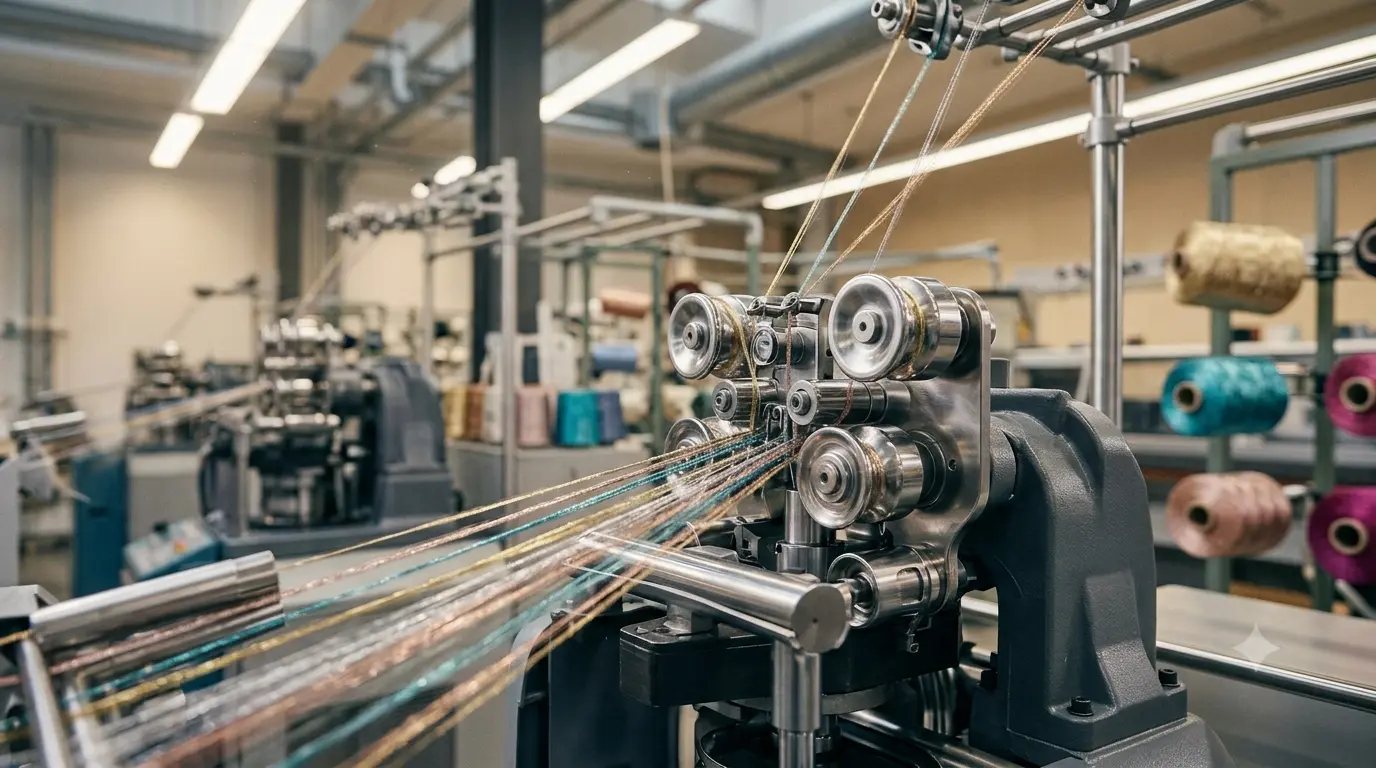
Stop looking at the “shine” and start looking at the elongation at break. In a production environment, the breaking tenacity is your most important metric. If the metallic yarn has a significantly lower tenacity than the rest of your blend, it will be the first point of failure. You want a yarn that can withstand the mechanical stress of the loom without shedding particles.
Another point of failure is static buildup. Metallic yarns are conductive, but the plastic coatings are insulating. This can create a static charge that attracts lint and dust, which then gets woven into the fabric. Ask your supplier if they use anti-static agents during the winding process. If they don’t, you’ll spend half your time cleaning the machines and the other half picking lint out of a “luxury” metallic fabric.
For those focusing on custom yarn blends, consider the twist per inch (TPI). A higher twist can hide the “flatness” of the metallic film and give the yarn a more rounded, organic appearance. However, too much twist can cause the foil to kink, creating “bright spots” where the light hits the kinked metal. It is a delicate balance of mechanical engineering and visual art.
Is “Lurex” a type of yarn or a brand?
Lurex is a brand, but in the industry, it has become a generic term for any metallic yarn. When talking to metallic yarn manufacturers, be specific. Don’t just ask for “Lurex.” Ask for metallized polyester film or aluminum-coated polyamide. Using the brand name often leads to a generic product that doesn’t actually meet the technical specs of the original patented process. Be precise about the film thickness and coating type to get what you actually need.
How do you handle the “scratchiness” of metallic yarns?
The only real way to fix scratchiness is through structural shielding. This means using a covered yarn where the metallic filament is encased in a fine nylon or polyester sheath. This protects the skin from the sharp edges of the slit film. If you are producing high-end apparel, this is a non-negotiable. You can also use a textile finishing process like a softener wash, but a chemical fix cannot overcome a structural flaw. The yarn itself must be designed for comfort.
The reality of sourcing and quality control
Don’t trust a manufacturer who promises “perfect” consistency across 100% of the shipment. No one is that honest. Instead, look for the one who tells you their tolerance levels. A manufacturer who says, “Our denier variance is within +/- 3%,” is someone you can actually work with. They understand the physics of the process.
When you receive your first bulk shipment, perform a stress test on the first and last cone. If the tension varies, the winding process was inconsistent. This will lead to “slubs” or “thin spots” in your fabric, which are a nightmare for quality control. If you see this, stop production immediately and demand a replacement. The cost of replacing a few cones is nothing compared to the cost of scrapping a 500-meter roll of finished fabric.
Finally, consider the environmental impact. Metallic yarns are notoriously difficult to recycle because they are a composite of metal and plastic. If your brand is moving toward sustainability, look for manufacturers experimenting with recycled PET cores or biodegradable coatings. It is a difficult market, and the “eco-friendly” options often have lower tenacity, so test them twice as hard as you would a standard synthetic.
The secret to a flawless metallic fabric isn’t the shine of the yarn, but the stability of the core that carries it. If the core fails, the shine is just a distraction from a defective product.
If you are tired of dealing with inconsistent filaments and shredded foils, it is time to move your sourcing to a partner who understands the mechanical reality of synthetic production. We specialize in high-tenacity, consistent metallic solutions that don’t break your machines.
Get a technical consultation and a precise quote from our experts at Jkorin.
Frequently asked questions
What is the difference between metallized yarn and metallic yarn?
Metallized yarn is typically a synthetic base that has been coated with a thin layer of metal via vacuum deposition. Metallic yarn is a broader term that can include the same process or the actual spinning of tiny metal wires into a yarn, though the latter is rare in garment production due to weight and stiffness.
Why does my metallic yarn keep snapping during knitting?
This is usually caused by a tension mismatch between the non-stretch metallic film and the stretch of the base yarn. It can also be caused by “burrs” or jagged edges on the slit film that snag on the machine guides.
How can I tell if a metallic yarn is high quality?
Check for foil adhesion by scratching the surface with a needle; the metal should not flake off. Also, verify the denier consistency across different cones in the same lot to ensure there are no thickness variances.
Can metallic yarns be used in Oeko-Tex certified products?
Yes, but you must ensure the lacquer and the base polymer used by the manufacturer are compliant. Not all metallic coatings are free of restricted phthalates or heavy metals, so always request the specific certification for that batch.
What is the best way to prevent metallic yarns from scratching the skin?
The most effective method is using a covered yarn, where the metallic filament is wrapped in a soft nylon or polyester sheath. This creates a physical barrier between the abrasive metal edge and the wearer’s skin.